
What Are the Signs of a Bad Paint Job?
In this article
A fresh coat of paint can make a home look completely transformed. But not all paint jobs are created equal — and some of the worst problems don't show up until weeks or months after the painter has left the site.
Here's what to look for when assessing a paint job, and what the warning signs of poor workmanship actually mean.
The Obvious Signs You Can See Immediately
Drips and runs. These are the most obvious indicator of rushed work or paint applied too thickly. Drips happen when too much product is loaded onto a brush or roller and not worked into the surface properly. A professional catches and corrects these as they go — they shouldn't appear on a finished job.
Uneven coverage and streaking. Hold a torch at a low angle to a painted wall and you'll see inconsistencies that aren't obvious in normal light. Streaking is caused by poor roller technique, incorrect paint dilution, or cheap rollers that leave texture marks. On a properly painted wall, the finish should be uniform in all directions.
Visible brush marks. Some brush marks are acceptable in certain applications — on detailed timber work, for example. But on flat walls and ceilings, visible brush strokes indicate poor technique or the wrong tools for the job.
Paint on surfaces it shouldn't be on. Overspray on glass, paint on hardware, skirting boards smeared onto floors — these are signs of a painter who doesn't take care of their prep or their finish. Masking and drop sheets exist for a reason.
Poor cut lines. The junction between two colours — wall and ceiling, wall and skirting, different rooms — should be clean and straight. A shaky or inconsistent cut line is immediately visible and indicates either poor technique or rushing.
The Signs That Show Up Later
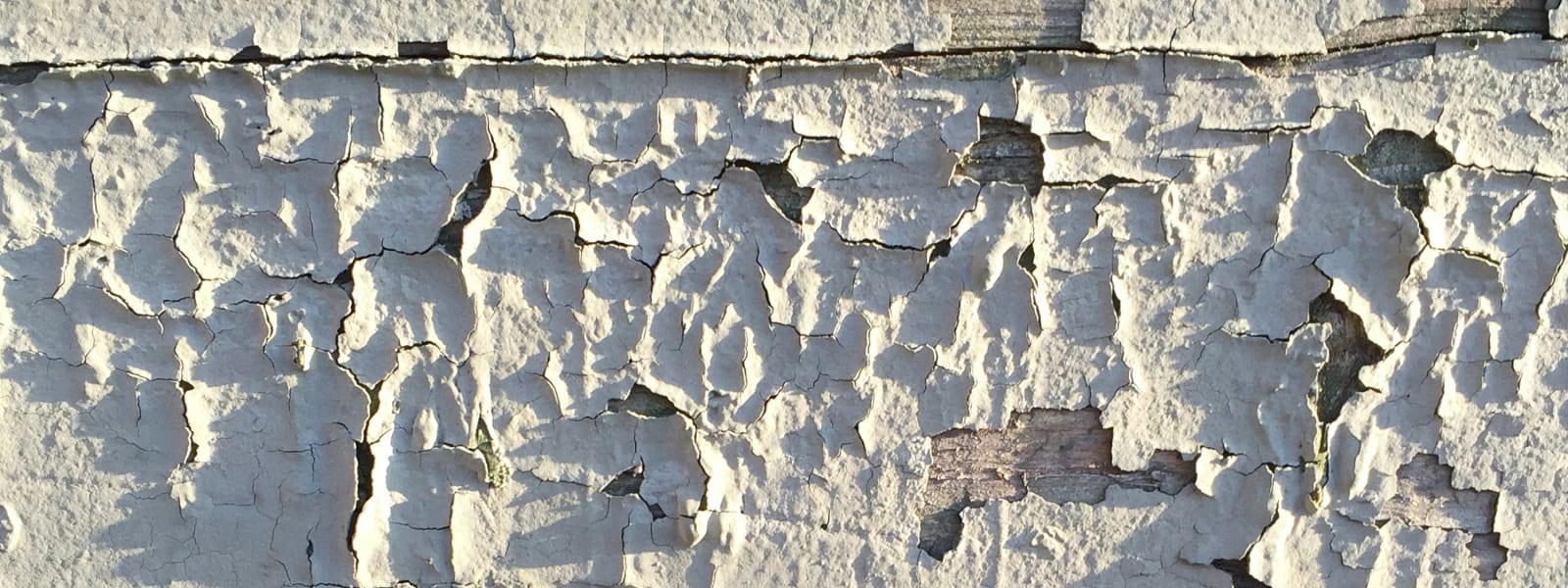
Peeling and flaking. This is one of the most serious problems and almost always indicates a preparation failure. Paint peels when it's applied over a surface that wasn't properly cleaned, sanded, or primed. On the Gold Coast, exterior surfaces exposed to salt air and UV are particularly vulnerable — peeling paint here is a clear sign of inadequate prep or the wrong products.
Chalking and fading. Some chalking on exterior paint is normal after several years, but premature chalking — within two or three years of a paint job — indicates low-quality products or the wrong paint system for the conditions. Gold Coast UV is intense, and using a cheap paint that isn't UV-stabilised will chalk and fade much faster than a premium system.
Mould and mildew returning quickly. If mould comes back within a year of a repaint, it means the surface wasn't properly treated before painting. Mould needs to be killed and the surface treated with an appropriate solution before any paint goes on — painting over it just traps the problem temporarily.
Bubbling and blistering. Blistering happens when paint is applied over moisture, or when it's exposed to heat before it's fully cured. On the Gold Coast, painting in the afternoon sun on a hot surface is a common cause. A professional knows to paint in the morning, work in shade, and avoid painting on surfaces that are too hot to touch comfortably.
What Causes a Bad Paint Job?
In our experience, poor paint jobs come down to three things: rushing preparation, using cheap products, and inadequate site supervision. A painter who gives you the lowest quote is usually cutting costs somewhere — and it's almost always in prep time, product quality, or the number of coats applied.
The cheapest quote is rarely the best value. A paint job that fails in two years costs significantly more to rectify than a job done properly the first time.
How to Protect Yourself
Before accepting a painter's completed work, do a final walkthrough in good natural light. Check cut lines, look for drips, run your hand along surfaces to feel for texture inconsistencies, and inspect the areas most likely to be rushed — behind doors, under windows, along skirtings.
Ask for a written warranty on the workmanship. A painter who stands behind their work should be willing to put that in writing. We offer a workmanship warranty on every job we complete.
Frequently Asked Questions
How do I know if my painter is using quality products?
Ask them directly — what brand, what product, what sheen level, and why. A professional painter knows their products and can explain their choices. If you get a vague answer, that's a red flag.
What should I do if I notice problems after the painter has left?
Contact the painter immediately and document the issues with photos. A reputable painter will return to rectify legitimate defects. If they're unresponsive, check whether they hold a QBCC licence — licensed painters in Queensland have obligations under the Queensland Building and Construction Commission Act.
How long should a professional paint job last?
A properly prepared and painted exterior should last eight to twelve years on the Gold Coast. Interior paint should last five to ten years under normal living conditions. If your paint is failing significantly before these timeframes, something went wrong.
Is it worth getting multiple quotes?
Yes — but compare them carefully. Make sure each quote covers the same scope: same number of coats, same prep work, same products. A lower quote that skips prep or uses a single coat isn't a fair comparison to a quote that does the job properly.
If you're looking for a Gold Coast painter who does the job right the first time, get in touch with Blue Collar Painting. We're QBCC licensed, fully insured, and we back our work with a written workmanship warranty.

Zach Franses
Owner, Blue Collar Painting